

B9 group installation
Commercial and farm solar, batteries and EV charging
Farm sheds and industrial roofs are the best solar sites in Northern Ireland: large, unshaded and busy in daylight. Batteries and EV charging go on the same connection.
- Free survey
- Fixed written quote
- NIE paperwork handled
- Part of the B9 Energy group, based in Larne
- typical system size
- 20–500 kWp
- per kWp installed, depending on scale
- £550–£900
- of solar used on site by daytime-load businesses
- 80–95%
- typical payback
- 4–7 years
All key figures
- Typical system size
- 20 kWp – 500 kWp
- Cost per kWp
- £550 – £900 depending on scale
- Self-consumption
- 80–95% for daytime-load businesses
- Typical payback
- 4–7 years
- Grid approval
- G99 application to NIE Networks
- Tax treatment
- Generally Annual Investment Allowance eligible
The detail
Generally yes, and more decisively than domestic solar. Businesses use most of their electricity in daylight hours, giving self-consumption rates of 80–95% against the 35–50% a household typically uses without a battery. Combined with commercial unit rates and Annual Investment Allowance relief, a 30–200 kWp roof array in Northern Ireland typically pays back in four to seven years.
Sectors where the numbers stack up
- Dairy and livestock farmsMilking, plate cooling, vacuum pumps and refrigeration run through the middle of the day.
- Poultry and grainVentilation and drying loads are large and run in daylight.
- Light industrial and warehousingCompressors, extraction, lighting and process loads.
- Retail, hospitality and officesAir conditioning and refrigeration peak when generation does.
More on each sector
The common factor is daytime load. If your electricity demand peaks between nine and five, solar in Northern Ireland works harder for you than it does for any household.
Dairy and livestock farms. Milking, plate cooling, vacuum pumps and refrigeration run through the middle of the day. Shed roofs are large, unshaded and structurally simple. A 50 kWp array on a dairy is a dependable investment.
Poultry and grain. Ventilation and drying loads are large and run in daylight. Multiple sheds allow phased installation, spreading capital cost across financial years while building generation.
Light industrial and warehousing. Compressors, extraction, lighting and process loads. Flat and shallow-pitch roofs suit ballasted or mechanically fixed mounting, subject to a structural loading assessment we carry out before design.
Retail, hospitality and offices. Air conditioning and refrigeration peak when generation does. Fleet and customer EV charging can be added to the same connection.
EV charging for fleets and car parks
We fit smart chargepoints for fleet vans, staff and customer parking, on the same connection as your solar and battery. Solar-aware chargers put surplus generation into the vehicles instead of exporting it, and load management keeps charging within your supply capacity.
Three-phase 22 kW charging is possible where the site has a three-phase supply. Where you want several chargers on a constrained supply, we make the application to NIE Networks for extra capacity. Businesses can claim through the Workplace Charging Scheme, worth up to £500 per socket across up to 40 sockets. More about EV chargers
Feasibility before capital
We test grid capacity and roof structure before you commit anything.
- Half-hourly consumption analysis to size against real load
- Roof structural loading assessment
- Yield modelling with shading and soiling losses
- NIE Networks capacity check and G99 application
- Export limitation design where the connection requires it
- Financial model covering payback, IRR and lifetime savings
- Capital allowance summary for your accountant
- Phased installation planning to minimise downtime
- O&M package with performance monitoring and annual inspection
Commercial case studies
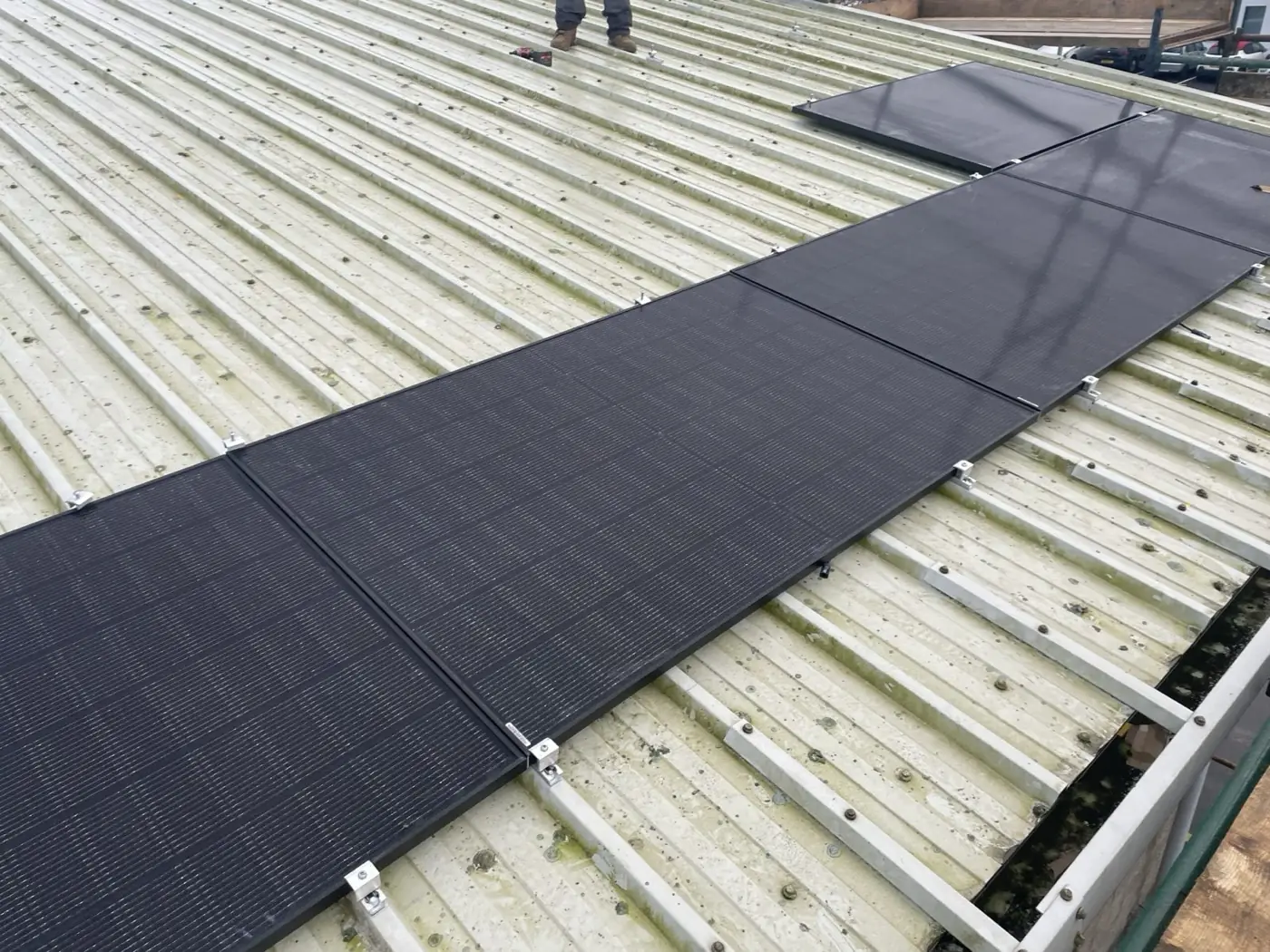
- Commercial case study · Enniskillen, Co. FermanaghRooftop solar for The Print FactoryA 108-panel, circa 50 kWp daytime-load array on an industrial roof in Enniskillen — designed, grid-approved under G99 and commissioned for a Northern Ireland print works that uses its power when the sun is up.
- B9 group install · Antrim, Co. Antrim · 2024Solar and battery storage for Firmus EnergyTwo 15 kWp solar systems, each with a BYD battery, on Firmus Energy's Antrim headquarters and the engineering building beside it. Installed in 2024 by B9.
Recent B9 group installs
- Firmus Energy, Antrim, 2024
- Two 15 kW solar PV systems with battery storage at Firmus Energy's headquarters. About 22,564 kWh a year, saving about 5.8 tonnes of CO₂ a year.
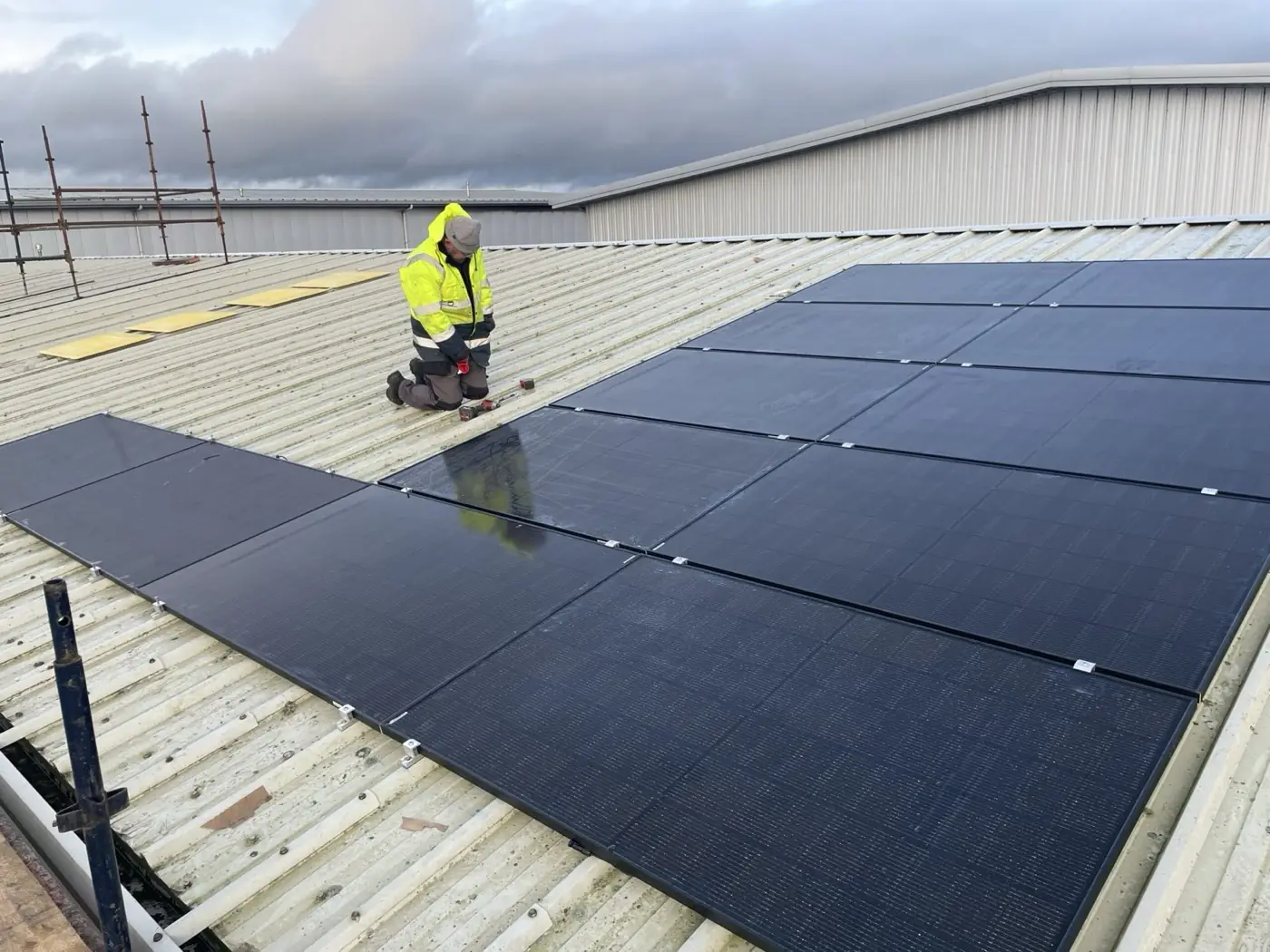
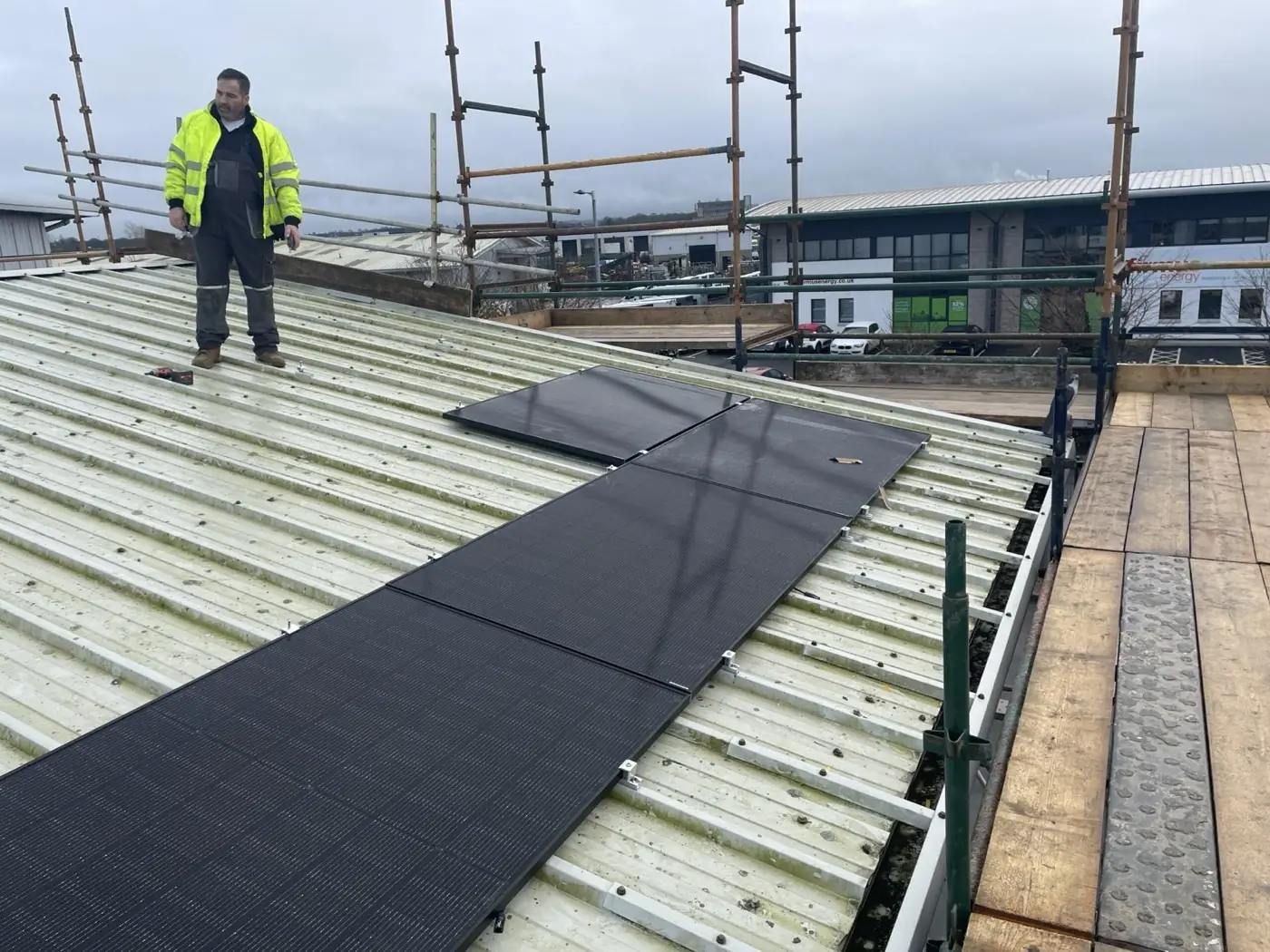
- Larne, December 2025
- A solar installation in Larne, completed in December 2025.
B9 Renewables is part of the B9 Energy group.
Commercial solar questions
Is commercial solar worth it in Northern Ireland?
Usually more so than domestic. Businesses consume most of their electricity during daylight hours, which means self-consumption rates of 80–95% rather than the 35–50% a household typically achieves without a battery. With commercial import rates and Annual Investment Allowance relief, payback of four to seven years is common.
How much does commercial solar cost per kWp?
Cost per kWp falls sharply with scale. A 30 kWp farm shed array typically lands around £700–£900 per kWp installed, and a 200 kWp commercial roof around £550–£750 per kWp. Ballasted flat-roof systems and roofs needing structural strengthening sit at the higher end.
Do I need G99 approval for a commercial system?
Almost certainly. Anything above 3.68 kW per phase requires a G99 application to NIE Networks and approval before connection. Larger systems may also need an export limitation device or a network reinforcement contribution. We scope this at the feasibility stage so it does not derail the programme.
Can solar be installed on an agricultural shed roof?
Yes, and they are often the best sites in Northern Ireland. They have large unshaded spans, simple access and daytime loads from milking parlours, refrigeration, grain drying and ventilation. Fibre cement sheet roofs need a structural check and appropriate non-penetrating fixings, both of which we assess at survey.
Is commercial solar tax deductible?
In most cases commercial solar qualifies for the Annual Investment Allowance, allowing the full capital cost to be set against taxable profits in the year of expenditure. Treatment depends on your circumstances, so confirm the position with your accountant before you order.
Get a commercial feasibility study
Send us twelve months of half-hourly data and a roof plan. We will come back with generation, self-consumption, payback and the grid position before you spend anything.
- Free survey
- Fixed written quote
- NIE paperwork handled
- Part of the B9 Energy group, based in Larne